
Product Selection
Ski or Snowboard Goggles? Start With Fit
Choose snow goggles around the wearer and conditions. Compare face and helmet fit, usable vision, lens suitability and care requirements for either sport.
On this page
One Product, Two Sport Labels
Skiers and snowboarders share the same essentials: a clear view, appropriate protection and a stable, comfortable fit. A goggle can serve both sports when its intended use, fit and lens options match the wearer. ISO 18527-1:2021 addresses downhill skiing and snowboarding goggles together, giving buyers a shared starting point for product evaluation.
Build the buying brief around how and where the goggles will be used. Ask about time on exposed slopes, sheltered runs, lifts and uphill travel, then compare ventilation, usable vision and lens options against those needs. Include representative users from both sports in sample reviews. Record their fit and handling feedback against the same criteria so the final range reflects actual users and conditions.
Fit Before Frame Style
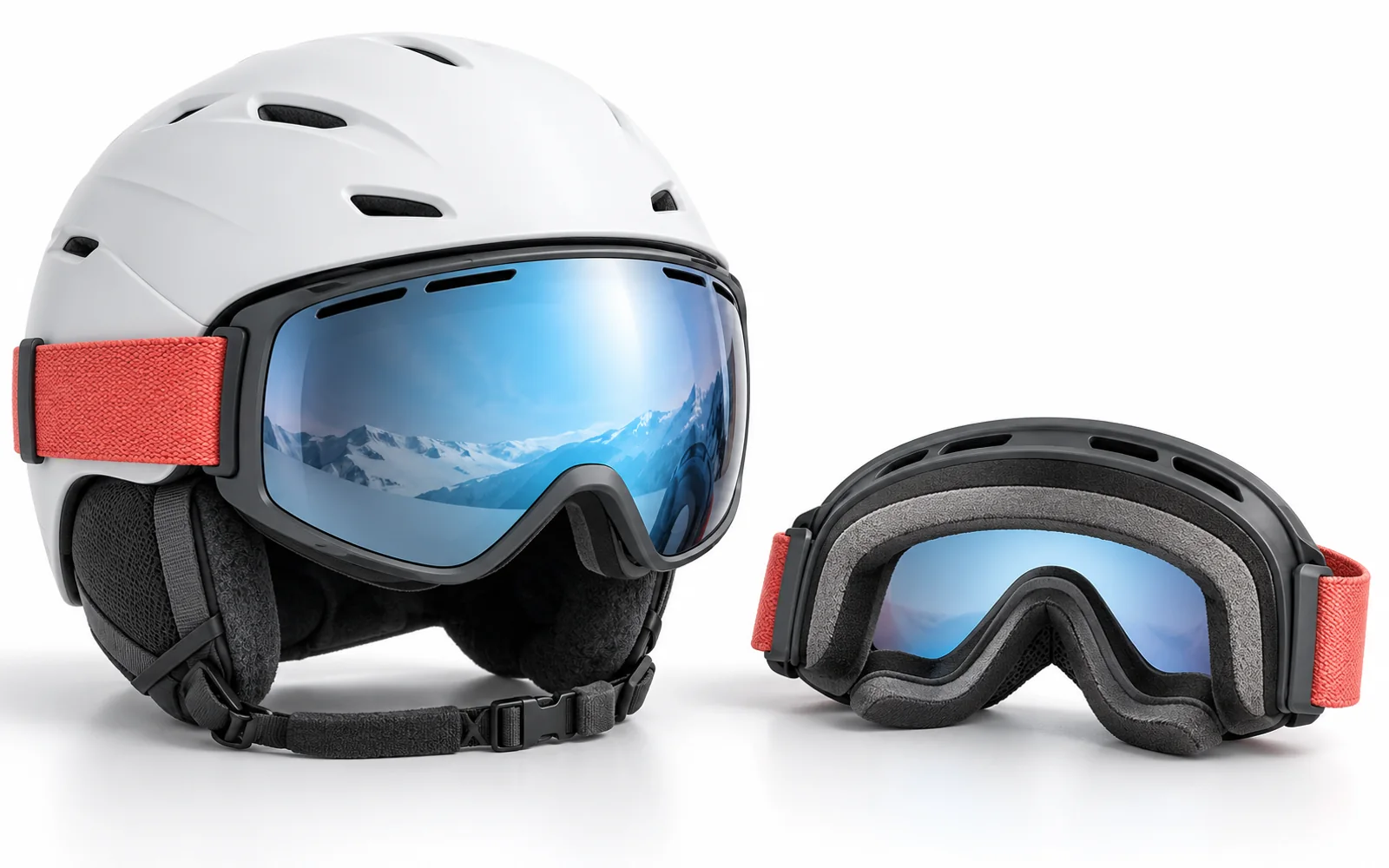
Start with the face, then add the helmet. Check the nose bridge, cheek contact and frame width without tightening the strap enough to disguise a poor seal. The helmet should not push the goggle down or prevent it from sitting naturally. Repeat the check with the neckwear and glasses the customer expects to use.
Over-the-glasses, or OTG, describes a design intention, not compatibility with every prescription frame. Check temple clearance, lens clearance and pressure during movement. Likewise, an oversized lens is not automatically a better fit: a large frame can sit poorly on a smaller face. Smith’s fit and fogging guidance recommends trying goggles with the gear worn on the slopes.
Compare the Actual Design
Use the same comparison for either sport. Work through these checks on each sample, recording the helmet, lens and frame size so the results remain useful when comparing configurations.
| Decision | Useful evaluation |
|---|---|
| Face and helmet fit | Check pressure, seal, strap adjustment and whether the helmet displaces the frame. |
| Usable view | Compare obstruction on the wearer; do not infer field of view from lens shape alone. |
| Lens selection | Match documented transmission and instructions to the intended light conditions. |
| Lens changes | Try removal, secure reattachment and spare-lens storage while wearing gloves. |
| Ownership | Confirm replacement lenses, care instructions and parts identification. |
Cylindrical, spherical and toric describe geometry. Compare usable view on the wearer and review optical results for the finished product. For a magnetic lens interface, check secure assembly, release operation and how easily the user can confirm that the lens is fully seated.
Light and Moisture Management
Visible light transmission, usually shortened to VLT, helps distinguish lighter and darker filters. The lens-category guide explains the bands. For an assortment, identify actual low-light and bright-light needs rather than stocking a single attractive mirror finish. Do not describe every low-light tint as suitable for night use; check the specific lens instructions and evidence.
Fogging also deserves a product-level assessment. Ask how the lens assembly, inner treatment and ventilation work together. A water-repellent or hydrophobic claim does not by itself demonstrate anti-fog performance. Keep the supplied care instructions with the product; Smith specifically cautions against wiping a wet or fogged inner surface because that can damage its treatment.
A Sample Checklist for Buyers
Record the sample configuration so that a comfortable fitting session can be connected to the product eventually ordered. A photograph of the frame alone is not enough.
- Identify the frame size, lens code, strap and foam construction.
- Record helmet models and sizes used in the fit assessment.
- Check vision and comfort on representative wearers, including OTG users where relevant.
- Inspect lens seating and operate any replacement system according to its instructions.
- Request variant-specific lens information, applicable test evidence and care guidance.
These checks help select samples; they do not replace laboratory testing or conformity assessment. If a different foam profile or lens assembly is supplied later, ask what must be reapproved rather than assuming the original evaluation transfers unchanged.
Build a Range Around Users
A retailer can merchandise one platform to skiers and snowboarders while offering meaningful choices in fit, lens and price. A smaller-face option, a verified OTG option and appropriate replacement lenses give customers clear reasons to choose a particular configuration. Present fit sizes and lens uses consistently across the range.
For sourcing, write quantities against each complete configuration and confirm availability with the supplier. Use ordering terms as a starting point; the final quotation governs the agreed scope, minimums and timing. Keep the approved sample codes with the order so the frame, lens and strap selected during evaluation are easy to identify at receipt and on a later reorder.
Sources & Further Reading
- ISO 18527-1:2021: scope for downhill skiing and snowboarding goggles
- Smith Optics: goggle fit, moisture management and inner-lens care
Sources checked for this editorial update. Standards and market requirements can change; confirm the applicable edition and product-specific evidence before placing an order.