
Sourcing & Orders
Ski Goggle MOQ: What the Minimum Covers
The standing minimum for a stock ski goggle is 100 pcs per colour. 50 pcs is possible when the factory has capacity, but it has to be confirmed before you plan around it. A new frame shape starts at 600 pcs plus tooling.
A minimum only becomes meaningful when you know what it counts. Separate finished-product, component and development commitments before comparing quotations.
On this page
A Number With a Scope
Minimum order quantity, or MOQ, describes the smallest quantity a supplier agrees to accept for a defined scope. It may refer to finished goggles, one frame colour, a particular lens treatment or a packaging run. Ask for the scope beside each minimum so you can compare offers against the same configuration list and planned quantities.
Setup work, component purchasing, available inventory and production scheduling all belong in the quotation discussion. Ask which requirement sets the minimum and what alternatives would reduce it. Useful options to explore include consolidating strap artwork, sharing packaging across configurations or selecting an available lens finish. Have the supplier price the revised combination so you can compare total spend and stock exposure.
Separate the Order Paths
Match the minimum to the work required. Check the availability of each stocked combination and identify the separate components involved in a branded or developed product. Use the following questions to make each order path clear.
| Scope | Clarify before comparing |
|---|---|
| Unbranded stock | Available configurations, condition, packing and whether mixed variants are accepted. |
| Existing platform with branding | Logo method and whether frame, strap and packaging have separate minimums. |
| Custom colour or lens finish | Which components change, batch quantities, approval samples and evidence review. |
| New tooling | Development fees, tool ownership, validation work and the separately quoted production commitment. |
| Replacement lenses | Compatibility, lens-specific quantities and whether these count toward the goggle order. |
For a new tool, request separate lines for the tool fee, development work and production commitment. Put mould ownership, maintenance, storage, transfer rights and any exclusivity in the agreement. This keeps the upfront investment distinct from the quantity of finished goggles being purchased.
Count Configurations, Not Just Colours
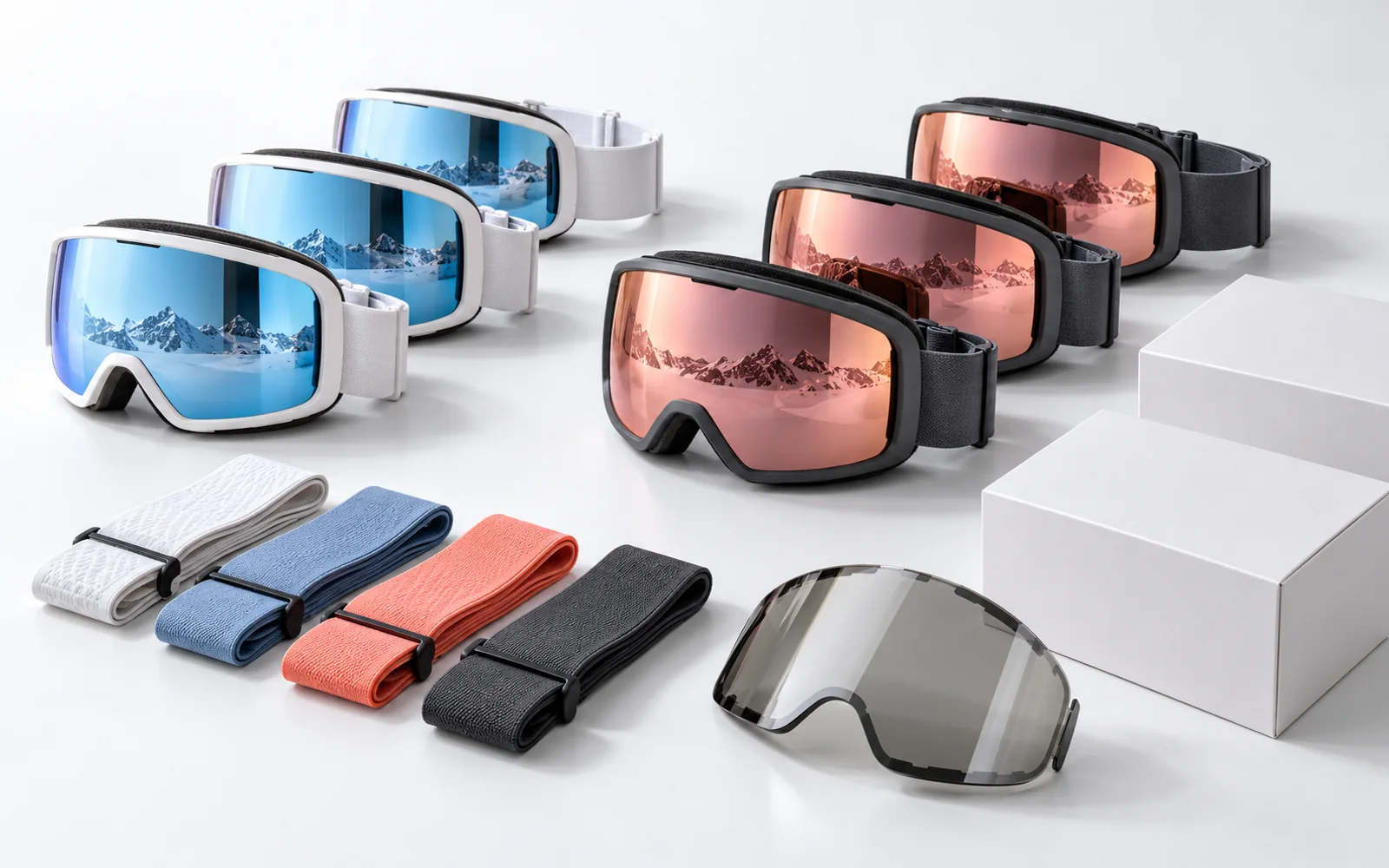
A sales configuration combines a frame, lens, strap and any accessories or packaging. List those combinations explicitly. Ask whether the supplier aggregates quantities by platform, component or finished sales code. A frame-colour minimum and a lens-treatment minimum can interact even when the overall order total looks large enough.
Illustrative arithmetic only: suppose a hypothetical quotation requires 120 units per finished configuration. Four configurations would require 480 units if each must meet that minimum independently. If component pooling is allowed, the result could differ. These numbers are not WORLUX terms or an industry benchmark. The calculation is useful only after the supplier confirms the counting rule in writing.
Manage Leftover Components and Cost
Ask what happens when a component minimum exceeds the finished-goods order. Can unused straps or boxes be held for a reorder? Who owns them, pays storage and accepts the risk that artwork or specifications change? Do not assume surplus components are included in the unit price or remain usable indefinitely.
Compare the total commitment: goods, setup, samples, development, tooling, evaluation, packaging and transport. Request the quotation basis and named delivery location. A lower unit price can still mean more cash tied up in slow-selling configurations. A smaller range using shared approved components may be more practical than purchasing extra colourways solely to achieve a price break.
Minimums Do Not Set the Calendar
Plan quantity and timing together. Ask when the production clock starts, which approvals are prerequisites, whether materials are available and whether capacity is reserved. Record sample dispatch, approval, production release, goods-ready and warehouse receipt as separate milestones. Confirm replenishment timing for repeat orders as well as the first production run.
Include product evaluation in the budget and schedule. ISO 18527-1:2021 addresses snow goggles; review the applicable requirements for the actual frame and lens variants. When specifying a custom tint, coating or component, confirm the evidence coverage and any additional evaluation needed. Give that work its own cost and approval date so it can be coordinated with material purchasing and production release.
Quotation Checklist
- List every finished configuration and its quantity.
- State the minimum per order and every component or variant minimum.
- Confirm which combinations can be mixed and which cannot.
- Separate setup, samples, tooling and evaluation from unit prices.
- Document surplus-component ownership and reorder arrangements.
- Define approval gates, lead-time start, quotation validity and delivery basis.
Read ordering terms and request one consolidated written offer for your exact scope. Include configuration quantities, component minimums, packing, evaluation work and the agreed delivery basis. The final quotation governs the agreed minimums, inclusions and schedule.
Before paying a deposit, match the purchase order to the accepted quotation and configuration matrix. Check the total commitment, approval responsibilities and payment milestones, including any separately purchased components or tooling. Keep the approved revision with the order so both parties can use the same reference during production, inspection and reordering.
Sources & Further Reading
Sources checked for this editorial update. Standards and market requirements can change; confirm the applicable edition and product-specific evidence before placing an order.